
Introduction
Once you damage a tooth, it’s game over for many patients.
Or, at least that’s how most people think about it.
After losing a tooth, individuals worry that they will have to have it pulled or that the damage is beyond repair. Extraction is sometimes necessary, but it is not the dentist’s first choice.
In many cases, the goal is to salvage the natural tooth as much as possible.
That’s where dental crowns come in.
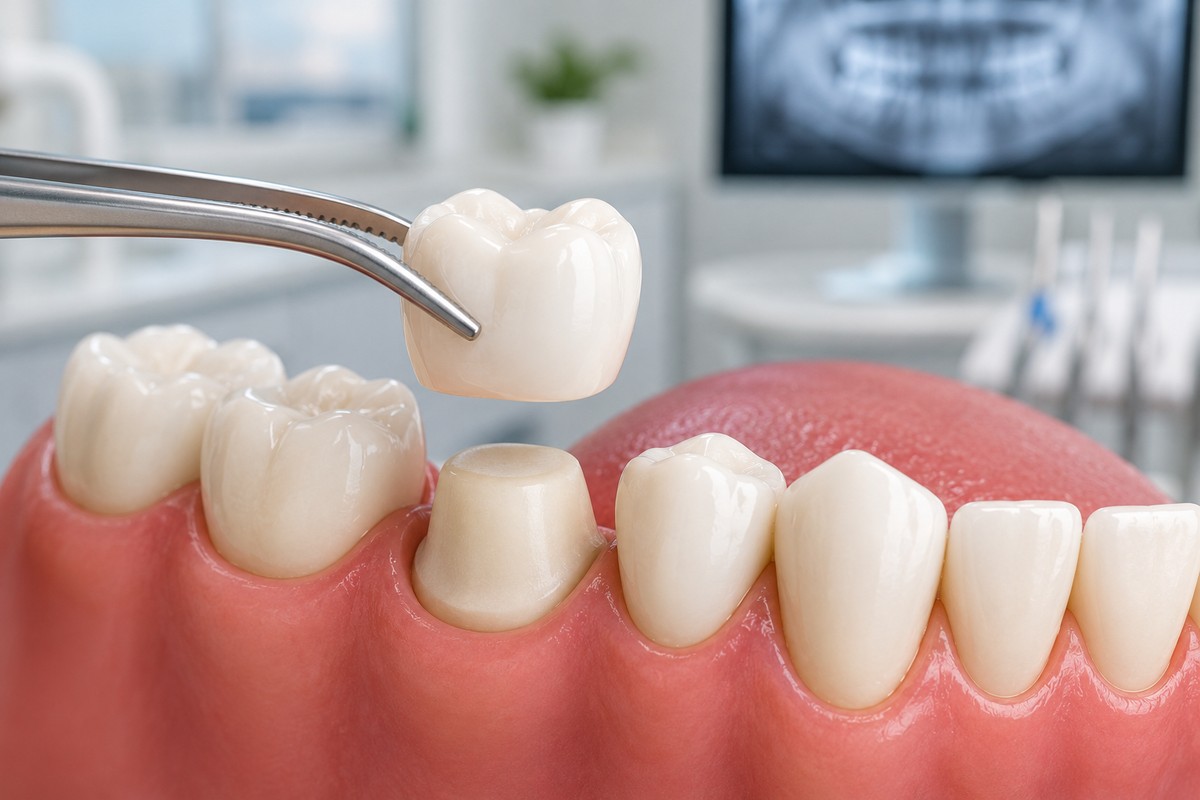
A crown is a restoration that is used to strengthen and protect a damaged tooth, as well as restore normal functioning of the tooth. It does not replace the entire tooth but rather works with the healthy structure that remains.
For patients, this means preserving a natural tooth that may otherwise continue to deteriorate over time.
By understanding the reasons for recommending crowns and restorations in Kansas City, MO, patients are better able to make decisions regarding their oral health and treatment options.
In this blog, we will cover why dentists try to save damaged teeth, how dental crowns function, and why crowns remain one of the most prevalent restorative treatments in today’s dentistry.
Why Saving a Tooth Is Often the Preferred Option
Dentists normally prefer to save the natural tooth when they can – it’s simple.
Natural teeth play an important role in daily life. They keep the bite balanced, improve chewing efficiency, and contribute to the overall health of the mouth.
A tooth might be broken, but the foundation might be healthy and worth saving. It may also require treatment even if it is not entirely broken.
Over time, teeth can weaken from wear, big fillings, cracks, or decay, leaving the tooth more vulnerable to future damage.
Typically, this is where a crown comes into the conversation. It aims to reinforce the existing tooth structure and reduce the chance of future trouble. A crown surrounds and protects the tooth, distributing the normal forces of chewing more efficiently.
But often dentists recommend porcelain crowns in Kansas City, MO, before a problem gets too bad. Getting to a weakened tooth early can help you avoid more extensive treatment later.
How A Dental Crown Restores A Damaged Tooth
- Evaluating the Tooth
The process begins with a thorough examination in which the dentist evaluates the condition of the tooth, surrounding tissues, and any existing restorations.
Imaging may also be used to assess the tooth’s internal health and identify structural concerns. This stage helps determine whether a crown is the most appropriate solution.
- Preparing the Tooth
Once treatment is recommended, the tooth is carefully prepared. A small amount of tooth structure is reshaped to create space for the future crown.
The goal is to ensure the restoration fits comfortably and functions properly within the bite. Patients are often surprised by how much planning goes into this stage.
- Taking Impressions or Digital Scans
After preparation, impressions or digital scans are taken. These records capture the shape of the tooth and surrounding teeth, allowing the crown to be customized for appearance and function. Accuracy during this stage plays an important role in the final result.
- Creating the Crown
The information gathered is used to fabricate the crown. Depending on the situation, crowns may be fabricated from materials that balance strength, durability, and appearance. Each crown is customized to fit the individual patient.
- Placing the Final Restoration
Once the crown is ready, it is placed and evaluated. The dentist checks the fit, appearance, and bite before securing it permanently.
For many patients, this is the point at which the damaged tooth begins to feel functional and protected again with dental crowns in Kansas City, MO.
At A Glance
| Who Qualifies? | Dental crowns are a great option for individuals with damaged or weakened teeth. |
| Process Overview | Step 1
The procedure starts with an initial examination with your dentist. Step 2 After understanding your oral condition, your dentist will begin with the dental crown restoration process. Step 3 Once the procedure is complete, your dentist will provide aftercare tips to support your recovery. |
| Timeline | Treatment is typically completed over one or more appointments, depending on the approach used. |
| Aftercare | Follow your dentist’s instructions to ensure the crown heals in record time. |
| Location & Contact | Dental Care Center of South Kansas City
325 E 135th St, Kansas City, MO 64145, United States |
Perks of Opting for Dental Crowns
Protects weak teeth
Crowns have many purposes, and one of their primary purpose is protection. A weakened tooth may also be more susceptible to fractures and other damage during routine daily activities. A crown can help to reinforce the tooth and reduce those risks.
Restores normal function
When you chew, you shouldn’t have to think about a certain tooth all the time. Many patients with damaged teeth can have their teeth’s strength and stability restored with crowns, allowing them to return to normal eating habits.
Prevents Additional Damage
If you don’t tackle small problems, they can become big problems. Covering and protecting a damaged tooth may help reduce the risk of future structural problems that could require extensive treatment.
Preserves Your Teeth for Life
Many restorative treatments are focused on preserving natural teeth whenever possible. Crowns are consistent with this goal of preserving teeth with remaining healthy supporting structures.
Blends in with natural teeth
Today’s crowns are often shaped to match the surrounding teeth in size, shape, and color. Many patients appreciate that the restoration can simultaneously improve function and appearance.
Can Increase the Longevity of Existing Dental Work
Some teeth have large fillings or old restorations that have been there for years. Proper tooth restoration in Kansas City, MO, can provide additional support and help prolong the lifespan of those teeth.
Dental Crown Care for the Kansas City Community
When patients in Kansas City are recommended for crown treatment, they often have the same question: “Do I really need a crown?”
It depends on the condition of the tooth. Dentists usually recommend crowns because they see signs of weakness that could cause problems in the future if left untreated.
Other patients worry about whether the crown will look natural or if people will notice.
Thanks to modern materials and treatment techniques, crowns can look much more natural than many patients think among the surrounding teeth.
Some patients worry that it takes longer to get treatment.
Each situation is unique, but delaying care can allow existing damage to worsen over time and make treatment more complicated in the future.
When opting for Dental Care Center crowns, the experts there understand the patient’s concerns and the condition of the tooth, and then discuss the options before we get started.
FAQs
1. When does a tooth need a crown?
A crown may be recommended for a tooth that is damaged by decay, fractures, large fillings, wear, or root canal treatment.
2. How long do dental crowns last in Kansas City, MO?
Many crowns can last well over 10 years with good care and regular dental visits.
3. Does getting a crown hurt?
The procedure is usually performed under local anesthesia to keep patients comfortable.
4. How much does a dental crown cost in Kansas City, MO?
Costs are based on the material, the condition of the tooth, and the patient’s needs.
5. What is the difference between a crown and a veneer?
A crown covers the entire visible portion of a tooth, while a veneer only covers the front surface to enhance its appearance.
Conclusion
In modern restorative dentistry, dental crowns are an important aspect of preservation rather than replacement. If a tooth is damaged, decayed, or worn down, a crown can provide the protective strength and function that can help you keep the natural tooth underneath.
Many patients are surprised to learn that crown treatment is often recommended to prevent future problems, rather than to treat a dental emergency. By addressing structural concerns early, dentists can help patients avoid more extensive treatment later on.
If you’ve been told that you may need a dental crown, understanding the reasons for the recommendation may help you make the decision.
Learn more about your smile with the experts at Dental Care Center of South Kansas City today!